
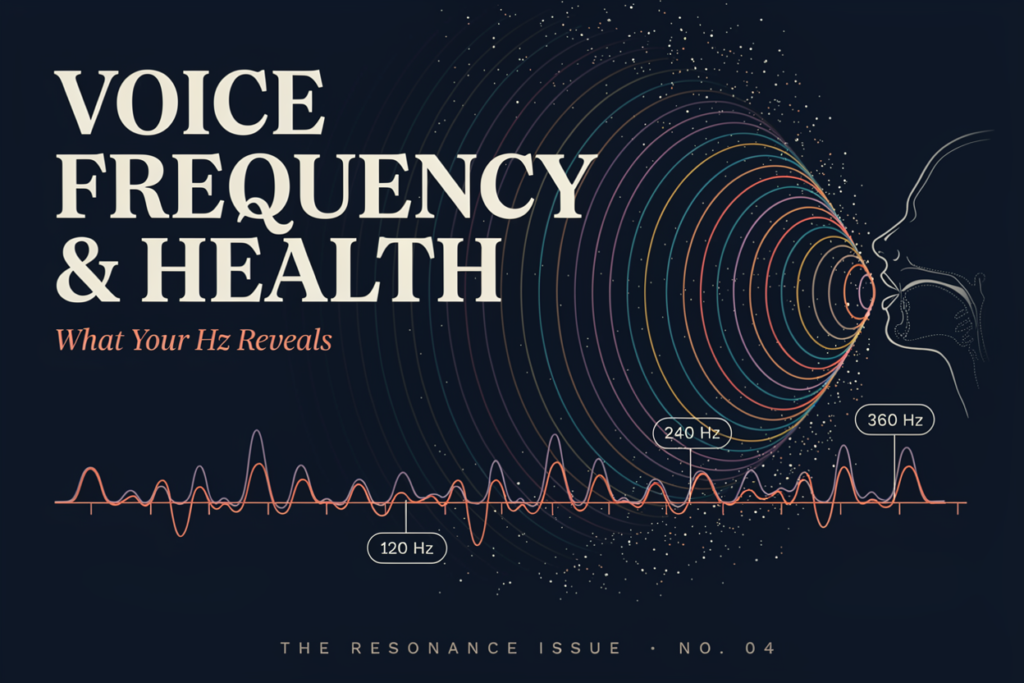
Voice frequency can provide clues about how the vocal folds are working,
but it is not a medical diagnosis by itself. The frequency of your voice
is mainly determined by the vibration rate of the vocal folds, measured
as fundamental frequency (F0) in Hertz (Hz). Changes in voice frequency
can happen because of normal aging, hydration levels, vocal strain,
hormonal changes, or changes in vocal fold condition.
What Is the Relationship Between Voice Frequency and Health?
Voice frequency reflects the physical behavior of the vocal folds during
speech. When the vocal folds vibrate faster, the voice has a higher
frequency and is perceived as a higher pitch. When they vibrate more
slowly, the voice has a lower frequency and deeper sound.
Understanding what voice frequency
means
helps explain why changes in your usual speaking voice may sometimes
indicate changes in vocal function.
The main measurement used by researchers and voice specialists is the
fundamental frequency (F0), which represents the number of vocal fold
vibrations per second.
How Vocal Folds Create Frequency
The vocal folds create sound by opening and closing rapidly as air
passes from the lungs through the larynx. Several factors influence
frequency:
- Vocal fold length
- Vocal fold thickness
- Vocal fold tension
- Amount of air pressure
- Muscle control
A person with longer and thicker vocal folds generally produces a lower
fundamental frequency, while shorter and thinner vocal folds usually
create a higher frequency.
You can learn more about this measurement through the explanation of
fundamental frequency of
voice.
Can Voice Frequency Reveal Problems With Vocal Health?
Voice frequency changes can sometimes be a sign that something has
changed in vocal function, but frequency alone cannot identify a
specific health problem.
A temporary change in pitch may happen after heavy speaking, singing,
dehydration, or illness. However, long-lasting changes such as
persistent hoarseness, reduced vocal range, or unusual vocal fatigue may
require professional evaluation.
Common Voice Changes Linked to Vocal Stress
Vocal stress can affect how efficiently the vocal folds vibrate. Common
changes include:
- A voice that becomes unusually rough or breathy
- Difficulty reaching normal notes
- Increased effort while speaking
- Reduced vocal endurance
These changes are related to vocal quality, not only frequency. A person
may have the same average Hz measurement but experience a noticeable
decline in voice function.
The relationship between frequency and vocal condition is explained
further in voice frequency and vocal cord
health.
Signs That Your Voice May Need Attention
A healthy voice should generally feel comfortable during normal use.
Possible warning signs include:
Healthy Voice Pattern Possible Warning Sign
Comfortable speaking Pain or discomfort while speaking
Stable voice quality Persistent hoarseness
Normal vocal range Sudden loss of range
Voice recovers after use Long-lasting vocal fatigue
If these symptoms continue for several weeks, a voice specialist or
healthcare professional can provide a proper assessment.
How Do Lifestyle Factors Affect Voice Frequency?
Daily habits can influence vocal fold vibration and the way frequency is
produced. Voice health depends on the condition of the entire vocal
system, including breathing, muscle coordination, and tissue health.
The Role of Hydration in Vocal Fold Vibration
Hydration helps maintain healthy vocal fold tissue. When the vocal folds
become dry, vibration may become less efficient, which can affect voice
quality and make speaking feel more difficult.
Dehydration does not permanently change your natural voice frequency,
but it can temporarily affect how your voice sounds and feels.
How Vocal Strain Changes Voice Quality
Frequent shouting, excessive singing without recovery, or long periods
of speaking can increase vocal stress. Professional singers often
monitor their voices carefully because repeated strain can affect vocal
performance.
Understanding your normal speech frequency
range can
help you recognize when your voice behaves differently from your usual
pattern.
Is a Certain Voice Frequency Better for Health?
There is no single voice frequency that is considered the healthiest for
every person. A healthy voice depends on efficient vocal function,
comfort, flexibility, and clear sound production.
Voice Frequency and Healing Claims
Some online discussions connect specific frequencies with physical
healing or health benefits. While sound can influence mood, relaxation,
and emotional state, there is limited scientific evidence that a
specific voice frequency alone creates medical healing effects.
Healthy vocal production is more related to proper technique, balanced
vocal fold function, and good vocal habits.
Healthy Voice Frequency vs Vocal Problems
Factor Healthy Pattern Problem Pattern
Frequency stability Consistent personal Sudden unexplained
range changes
Vocal effort Comfortable production Excessive pushing or
strain
Recovery Voice returns after use Fatigue continues
Sound quality Clear and controlled Rough or weak sound
How Can You Monitor Your Voice Frequency?
You can measure voice frequency using recording software, acoustic
analysis tools, or online frequency tests. These measurements can
estimate your voice characteristics but are not equal to a clinical
voice examination.
When checking your voice, it helps to compare results over time rather
than focusing on one measurement.
A guide on how to measure voice
frequency
explains how frequency measurements are collected and interpreted.
Tracking Changes Over Time
Keeping track of your usual speaking frequency can help you notice
patterns caused by:
- Aging
- Increased speaking demands
- Singing practice
- Illness recovery
- Vocal habits
Normal voice frequency also changes throughout life. Age-related changes
are discussed in average voice frequency by
age.
When Professional Voice Assessment Helps
A professional assessment may be useful when voice changes are
persistent, uncomfortable, or interfere with communication. Specialists
can evaluate vocal fold movement, voice quality, and other factors
beyond frequency.
FAQ: Voice Frequency and Health
Can voice frequency show health problems?
Voice frequency can show changes in vocal function, but it cannot
diagnose health problems by itself. Persistent changes in voice quality
or comfort should be evaluated by a qualified professional.
Does a lower voice frequency mean better health?
No. A lower frequency does not automatically mean better health. Healthy
voices exist across many different frequency ranges.
Can dehydration affect voice frequency?
Dehydration can temporarily affect vocal fold vibration and voice
quality. It may make the voice sound weaker, rougher, or less flexible.
Why does voice frequency change with age?
Voice frequency can change with age because the vocal folds and
surrounding muscles naturally change over time. Hormonal changes and
tissue elasticity can influence speaking pitch.
Can vocal exercises improve voice frequency control?
Vocal exercises can improve breath support, coordination, and vocal
control. They may help a person use their natural voice more
efficiently, but they do not simply force the voice into a specific
frequency.

Bobby is a voice analysis and vocal testing writer at VoiceFrequencyTest. He focuses on vocal frequency analysis, pitch recognition, voice measurement tools, and singing education for vocalists, musicians, creators, and beginners.